The Lacey Act and imported wood
Parota, monkeypod, bubinga and other imported slabs are popular for river tables. Wood is a plant under U.S. law, and the Lacey Act covers plants. It’s worth knowing the basics whether you’re buying a finished table or a raw slab.
- It is unlawful to import, export, transport, sell, receive, acquire or purchase plants taken, possessed, transported or sold in violation of U.S. law or certain state and foreign laws.
- Covered foreign-law violations include theft, taking from protected areas, taking without authorization, unpaid royalties, taxes or stumpage fees, and export limits.
- Importers must file a declaration with the plant’s genus and species, value, quantity and country of harvest.
- False records, labels or species identification are a separate offense.
What the statute prohibits
Under 16 U.S.C. 3372, Lacey Act prohibited acts, it is unlawful to “import, export, transport, sell, receive, acquire, or purchase” in interstate or foreign commerce any plant taken, possessed, transported or sold in violation of any State or foreign law that protects plants or regulates:
- the theft of plants;
- taking plants from a park, forest reserve or other officially protected area;
- taking plants from an officially designated area; or
- taking plants without, or contrary to, required authorization.
It also covers plants taken “without the payment of appropriate royalties, taxes, or stumpage fees,” and plants moved in violation of foreign limits on export or transshipment.
Import declarations
Section 3372(f) makes it unlawful to import a plant without a declaration listing “the scientific name of any plant (including the genus and species),” the value and quantity of the import, and “the name of the country from which the plant was taken.” For products where the species or country varies, the declaration must list each possible species or country. USDA APHIS: Lacey Act administers the declaration program.
False labels
Section 3372(d) makes it unlawful to “make or submit any false record, account, or label for, or any false identification of” any plant that is imported or moved in interstate commerce. Calling a slab a different species than it is can be a problem in its own right.
Questions to ask a seller
- What’s the species, by scientific name?
- What country was it harvested in, and who imported it?
- Is there import paperwork, like the declaration, or harvest documentation?
- Is it a domestic species instead? Walnut, maple, oak and cherry avoid the question entirely.
Related: imported hardwoods ranked by shrinkage and bubinga vs cocobolo vs rosewood. This is general information, not legal advice.
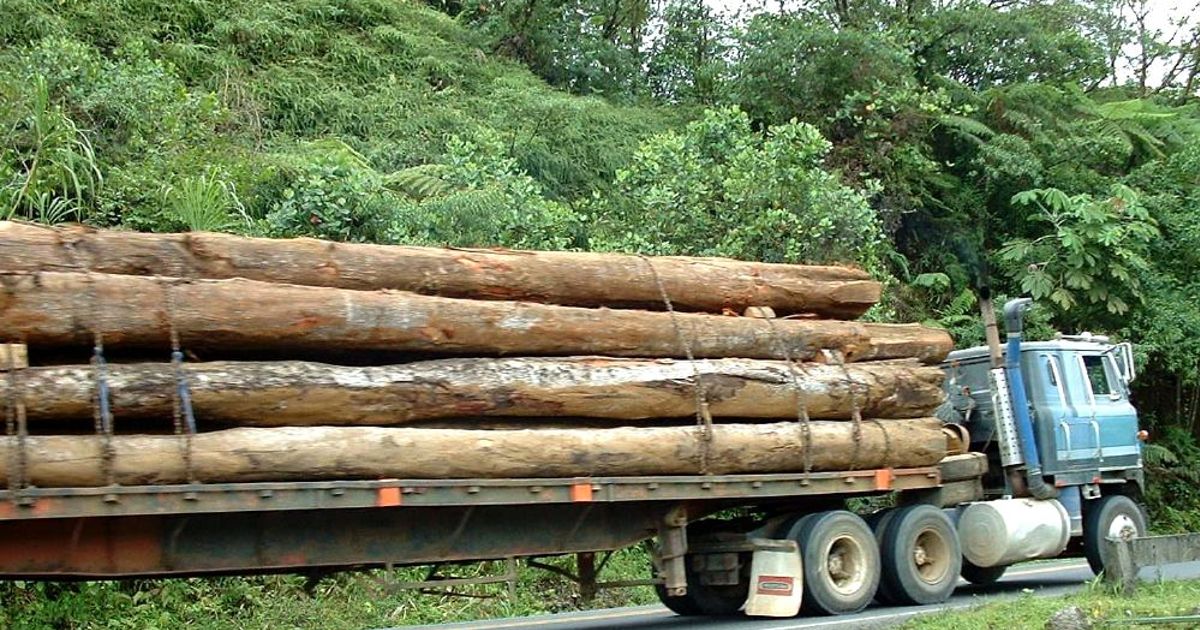
Header image: Photo: “BraulioCarrilloLogsApr03” by Tim Ross, PUBLIC DOMAIN (cropped).