Formaldehyde in furniture: what the labels mean
Most solid-slab epoxy tables are hardwood and resin, but many bases, substrates and budget tables use plywood, MDF or particleboard. Those composite woods are where formaldehyde rules come in.
- EPA’s national rule (40 CFR Part 770) limits formaldehyde emissions from hardwood plywood, MDF and particleboard.
- After March 22, 2019, those composite wood products, including finished goods containing them, must be labeled TSCA Title VI compliant.
- California’s Prop 65 fact sheet lists formaldehyde from some composite wood and coatings among furniture chemicals of concern.
- Buyers can look for solid wood, formaldehyde-free composite wood, or labels like TSCA Title VI, CARB Phase 2, NAF or ULEF.
The federal rule
According to U.S. EPA: Formaldehyde Emission Standards for Composite Wood Products, EPA published a final rule on December 12, 2016 “to reduce exposure to formaldehyde emissions from certain wood products produced domestically or imported into the United States,” developed with the California Air Resources Board. “After March 22, 2019, composite wood products must be labeled as TSCA Title VI compliant.” Covered products include “hardwood plywood, medium-density fiberboard, and particleboard, as well as household and other finished goods containing these products.”
California Prop 65
The California OEHHA Proposition 65: Furniture Products fact sheet says some furniture may expose you to listed chemicals, including “formaldehyde released from some composite wood (for example, particleboard and plywood) and coatings (for example, paints and lacquers).” It notes not all furniture contains them, and some products without warnings may not cause exposures high enough to require one.
What to look for
- Furniture “made with solid wood, stainless steel, or formaldehyde-free composite wood.”
- Low-emission labels the fact sheet lists: “TSCA Title VI Compliant and California Air Resources Board (CARB) Phase 2 Compliant,” “No-added formaldehyde (NAF)” and “Ultra-low-emitting formaldehyde (ULEF).”
- Air out new composite-wood furniture where possible, and keep humidity and temperature moderate. The fact sheet notes more formaldehyde is released in hot, damp conditions.
For shop-side chemical safety see safety data sheets and labels and finishing chemical hazards.
General buyer information. Sources: U.S. EPA: Formaldehyde Emission Standards for Composite Wood Products; California OEHHA Proposition 65: Furniture Products fact sheet.
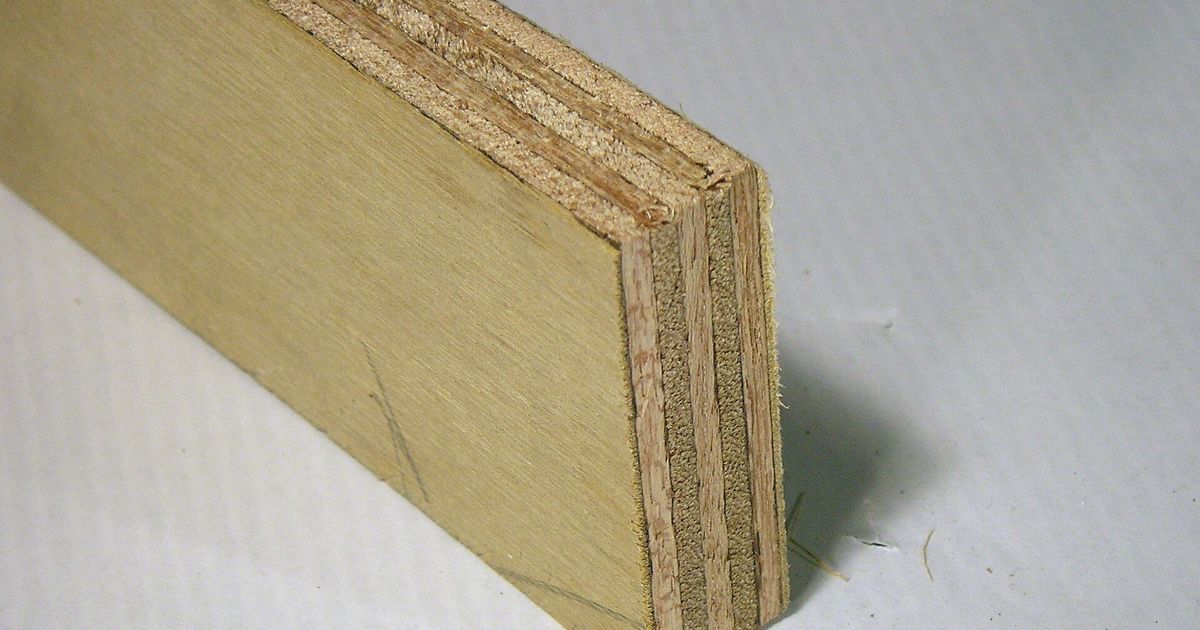
Header image: Photo: “Plywood” by Rotor DB at English Wikipedia, CC BY-SA 3.0 (cropped).