How heat resistant is an epoxy table?
One of the most common questions about epoxy river and resin tables is whether you can set a hot mug or a serving dish on them. The short answer: a fully cured epoxy top handles everyday warmth well, but very hot cookware can leave a mark. Here’s what resin makers say, and how to protect your table.
- Many tabletop epoxies are rated to roughly 190°F (88°C) once fully cured, not to the temperature of a pan straight off the stove.
- Hot dishes, pans and boiling water can leave an impression in the surface.
- Let the epoxy fully cure (often 7 days) before heavy use, and use trivets for anything from the oven or stove.
What resin manufacturers say
The Industrial Clear epoxy FAQ says its cured resin “can withstand temperatures of up to 190°F (88°C),” but warns that “very hot objects, like a dish straight out of the oven, a hot pan or boiling water, may leave an impression on the cured resin surface.” It recommends letting the resin cure for a full 7 days before putting a project into use. Other brands publish different ratings, so check the data sheet for the specific resin used on a table.
For context, a pan from the oven or stovetop can be far hotter than 190°F, while a mug of coffee is cooler than boiling water by the time you set it down. That’s why coasters for mugs are a nice habit, and trivets for cookware are a must.
Why cure time matters
Epoxy keeps hardening for days after it feels dry to the touch. A table that’s used heavily too early is more likely to dent, print or mark. MAS Epoxies also notes in its MAS Epoxies: Table Top Pro FAQ that epoxy is temperature sensitive during application: working above about 80°F can make it set too quickly and “exotherm, become too hot, which could cause it to yellow, distort or crack.” A well-made table is poured in controlled conditions and given time to cure fully.
Everyday habits that protect an epoxy top
- Use trivets or hot pads for anything from the oven, stove or grill.
- Use coasters for hot drinks.
- Keep it out of strong direct sun; see epoxy yellowing and UV.
- Don’t use it as a cutting board; knives will scratch the surface.
- Clean with mild soap and water; see how to care for an epoxy table.
What if there’s already a mark?
Light rings and haze can often be polished out. Deeper marks may need sanding and a refinish, or a fresh flood coat; see sanding and polishing epoxy. If you’re ordering a custom table and expect heavy kitchen use, mention it so the finish can be planned for it (see how to order a custom epoxy table).
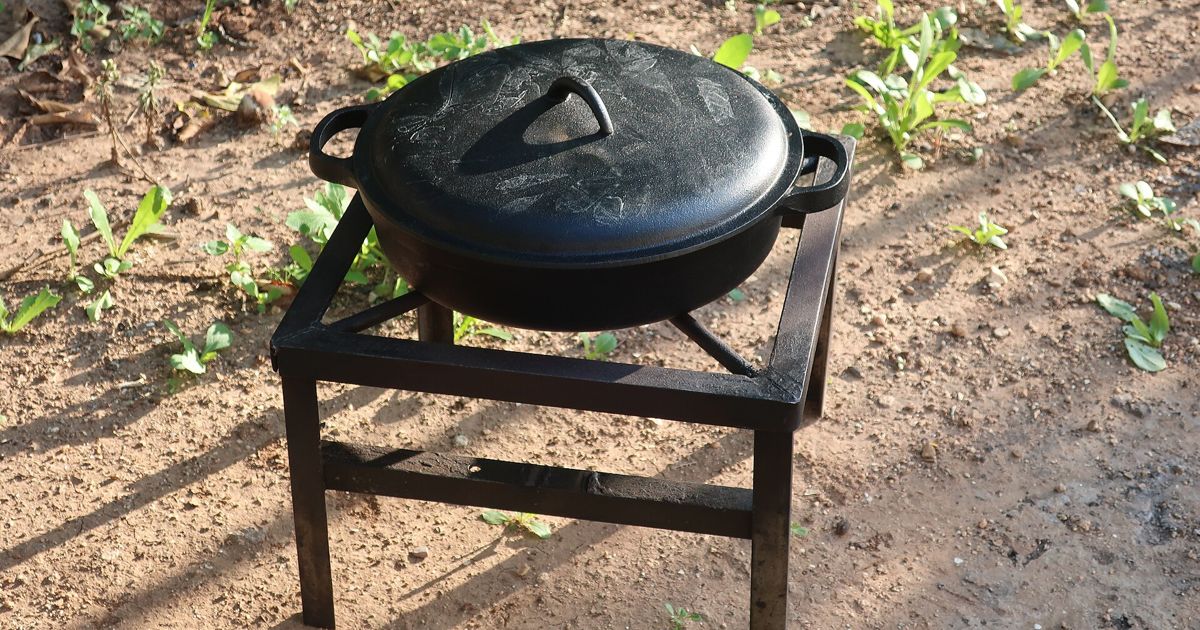
Header image: Photo: “Trivet with cast iron pot” by Davidbena, CC BY-SA 4.0 (cropped).